Showing posts with label laundry room. Show all posts

Wednesday, January 20, 2016

noxious & toxic

"You could paint a meatball if you painted it with Zinsser first." 
quote found on painting forums, attributed to "an old painter."

Here are the utility shelves with a first coat of primer (the bottom two anyhow). The light is different because I changed the ceiling fixture. When I changed the light bulb a few weeks back I noticed some burn marks on the ceiling and discovered the wires inside the fixture were also a bit crispy. Not good! Probably someone used a high wattage bulb in the 60 watt fixture. I found a new fixture on a closeout sale at Wayfair for $1.06 and snapped it up. It uses two bulbs instead of one for more light. Yay!

The shelves are looking pretty good already. I can barely see the places I patched. I am using Zinsser B.I.N. Primer, the shellac-based product that is the subject of the quote at the top of the page.


Two reasons I chose this primer were a) it has great adhesion without having to sand the surface and b) it blocks stains and prevents wood tannin from seeping through. I'm hoping to eventually paint the stained wood and particle board cabinets and the wood paneled wall in my kitchen, and this seems to be the most appropriate product. It was either this or an oil-based product.

I'm using a 4" wide high density foam roller for the flat surfaces inside the cabinet, and a 2 1/2" synthetic bristle angle brush for the corners. The primer is so thin it's almost like painting with water, so it takes some getting used to.

Now for the "noxious & toxic" part.

B.I.N.  isn't low VOC. According to The Fun Times Guide this stuff has 550 grams per liter of volatile organic compounds compared to about 100 g/l for a low VOC Valspar primer. Because it's high VOC it stinks to high heaven. I wear gloves, goggles and a respirator whenever I open the can.

Cleanup is also noxious. You can use denatured alcohol or ammonia. Ammonia's a lot cheaper so that's what I use. I make a solution of half ammonia and half water and add a few drops of dishwashing detergent. I have used this formula with good results on both my brush and roller. After using the ammonia solution I rinse them in water.

More experiments await.

Friday, January 15, 2016

winter ventures

I've been working on some house updates since the great outdoors has been a bit chilly. First on the agenda was the utility room.


There's nothing really wrong with this room except it's dark and the cabinets don't work for me. Before they put this house up for sale the previous owners painted all the non-paneled and non-papered walls in the house this dark griegy-mauve and all the trim a bright white. The paint was good for a temporary spruce-up, but because they put latex paint directly over oil paint it wasn't long before the paint started peeling off, mainly on the cabinet doors.

 I removed the cabinet doors and installed a brighter light bulb. The room felt so much better I decided the doors were not coming back. Great paint job, eh? They just slapped the paint on without even removing the doors. I spent hours cleaning paint off the hinges from the bathroom cabinets; I was so glad I wouldn't have to repeat the process here.


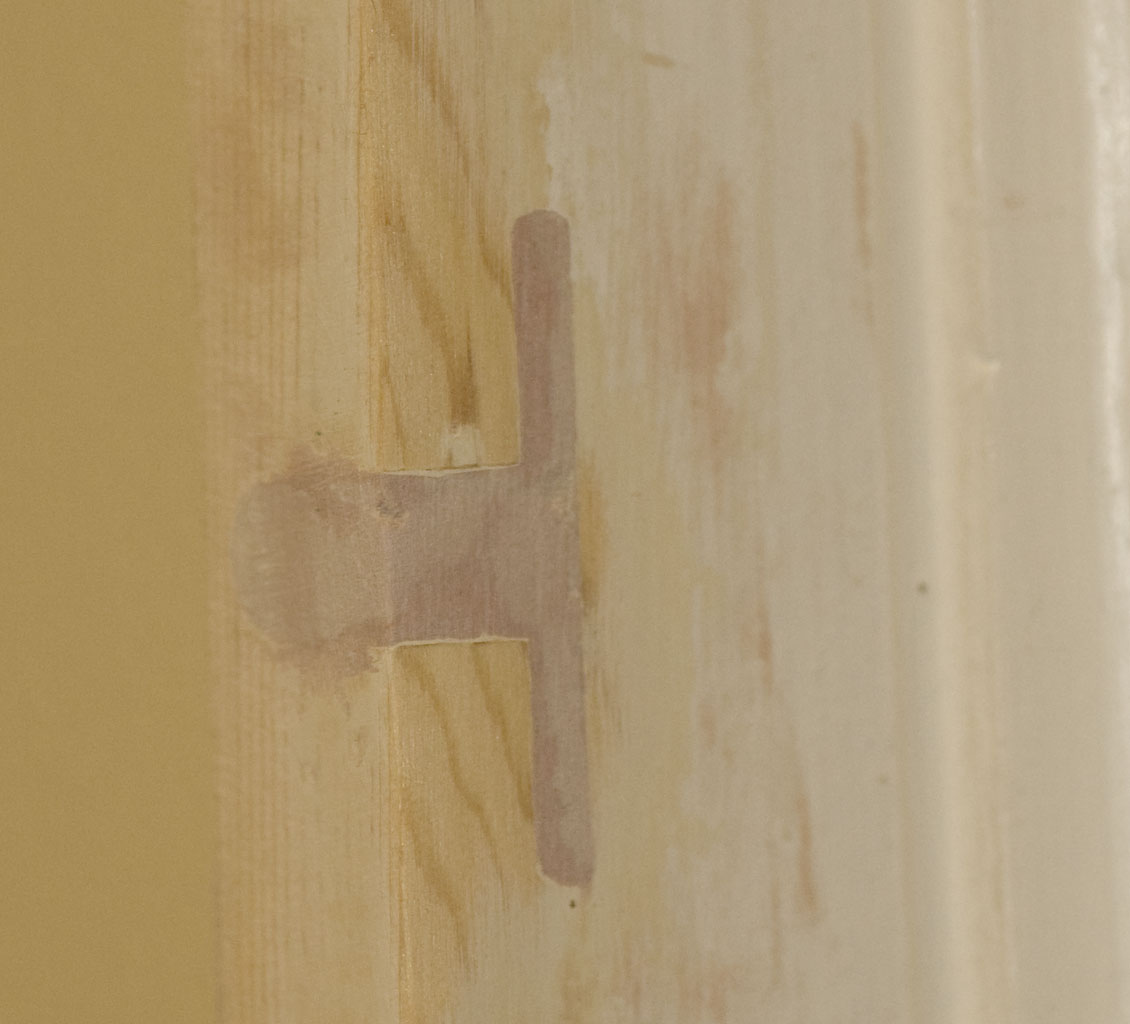
First step was going to be filling the cracks at the back of the cabinets and all the holes where the hinges were. That's what I've been working on for the last few weeks. I experimented with a couple of wood fillers and wasn't happy with the results, so I finally settled on Bondo, a quick-drying two-part resin usually used in auto repair.

I had to get some kneepads, because it didn't take more than a minute of kneeling on top of the washer or dryer for my knees to start yelling at me.

I have arthritis, so I can only kneel and reach for a short time, but every little bit of work adds up. Every day I'd tape off all those holes with masking tape, mix up some Bondo, and jam it into those holes.  Then I'd peel off the tape and let it cure. It's extra work to tape off, but it minimizes sanding time later. It's great that Bondo hardens so quickly, but it also means you only have about 4 or 5 minutes of working time. You also need to wear a respirator when sanding this stuff. Bondo smells pretty bad, and it takes a few days for the smell to dissipate, so it doesn't take long before I get tired of the smell and stop the whole process while I work on something else.

These two videos helped me tremendously with Bondo:
How to repair a crack in wood using Auto Bondo
DIY - Repair a door with Bondo Auto Body Filler  - This one is long, but shows the patience required to layer the Bondo on deep repairs.

I used putty knives to apply the Bondo and found old plastic cards (such as credit cards) worked well to scrape the material off the blades of the knives. I wear disposible vinyl gloves when mixing and applying Bondo because I tend to make a mess when I'm working. This case was no exception.

Look at that! Nearly done!